Best Enterprise URL Shortener for Teams
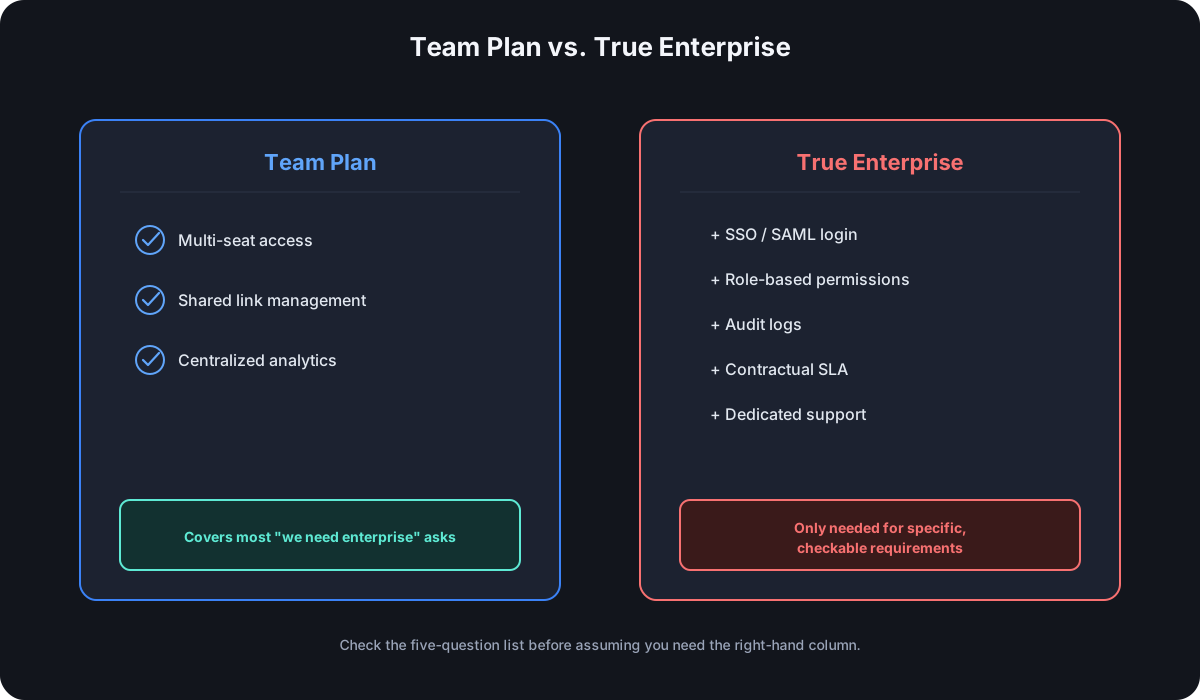
"Enterprise" gets used loosely enough in SaaS marketing that it's worth pinning down before evaluating anything against it. In a URL shortener specifically, enterprise isn't a bigger version of a team plan — it's a distinct set of requirements: SSO, granular admin controls, audit logs, contractual SLAs, and dedicated support. Most organizations searching for an "enterprise URL shortener" actually need a strong team plan, not the full checklist — this is how to tell which one you actually need.
What "Enterprise" Actually Means for a URL Shortener
The features that separate genuine enterprise tiers from a good team plan are specific and checkable, not a vibe:
- SSO/SAML — logging in through the organization's existing identity provider instead of a separate password, usually a hard requirement from IT security policy rather than a nice-to-have.
- Granular role-based permissions — who can create links, who can edit destinations, who can only view analytics, enforced per user rather than an all-or-nothing team account.
- Audit logs — a record of who did what and when, often required by internal security review or compliance obligations rather than day-to-day usage.
- Contractual SLAs — a specific, guaranteed uptime commitment with consequences if it's missed, distinct from a general "we aim for high availability" statement.
- Dedicated support and onboarding — a named contact and a response-time commitment, instead of a shared support queue.
The Enterprise Checklist
If any of the following is a hard requirement rather than a preference, you're evaluating true enterprise tiers, not team plans:
- Does your IT policy mandate SSO for any tool handling company data?
- Does a security or compliance review require audit logs for who created or modified links?
- Is a contractual uptime guarantee a procurement requirement, not just a preference?
- Do you need role-based permissions beyond "everyone on the team can do everything"?
- Is a dedicated point of contact, rather than a shared support queue, a real operational need?
Where Most Providers Draw the Enterprise Line
This isn't unique to any one shortener — Bitly gates real multi-seat access behind a custom Enterprise quote rather than including it in a self-serve tier, and that pattern holds across most of the category. Genuine enterprise features are expensive to build and support, so providers typically reserve them for a sales conversation rather than a checkout page, regardless of brand.
The five checklist items don't always bundle together the same way, either. Cut.bd, for instance, includes role-based access and an audit log in its mid-tier Team plan rather than gating them behind a separate enterprise tier, while SSO and a contractual SLA aren't published as available at any tier. Check each item individually against a provider's actual feature list rather than assuming a plan name implies all five come as a set.
Team Plans vs. True Enterprise
Most organizations that start searching for "enterprise URL shortener" are actually looking for something narrower: more than one person managing links, shared reporting, and consistent branding across a team — not the full compliance checklist above. A solid team plan covers exactly that: multi-seat access, centralized link management, and shared analytics, at a fraction of the cost and procurement complexity of a genuine enterprise contract. The checklist in the previous section is the honest test — if none of those five questions get a "yes," a team plan is very likely the better fit, not a compromise.
Red Flags When Evaluating Enterprise Claims
- "Enterprise-grade" with no specifics. The term should point to a checkable feature list, not stand in for one.
- No published SLA number. A real uptime commitment is stated as a percentage with consequences attached, not implied.
- Every pricing question routes to "contact sales." Legitimate enterprise pricing is often custom, but basic tier structure and what's included at each level should be discoverable without a sales call.
How to Decide
Work from the checklist, not the label:
- A hard SSO, audit log, or SLA requirement means evaluating actual enterprise tiers specifically against those checkboxes — don't assume "enterprise" in a plan name means all three are included.
- "More than one person needs to manage links well" is a team-plan problem, not an enterprise one, and paying for enterprise procurement complexity to solve it is usually unnecessary cost.
Frequently Asked Questions
Does a bigger team automatically mean I need an enterprise plan? No — team size and enterprise requirements are separate axes. A 50-person team with no SSO or compliance mandate needs a generous team plan, not enterprise; a 5-person team in a regulated industry might need SSO despite its small size.
Is SSO worth requiring if it's not currently mandated? Only if you expect it to become a requirement soon — adding it as a "nice to have" now mostly narrows your options without a corresponding benefit yet.
What's the actual cost difference between team and enterprise tiers? It varies by provider, but the pattern is consistent: enterprise tiers are typically custom-quoted rather than published, specifically because the features involved (SSO integration, dedicated support, contractual SLAs) carry real ongoing cost to support.
Can I start on a team plan and move to enterprise later? Generally yes — link data and team structure typically carry over, since enterprise tiers usually build on top of the same underlying product rather than replacing it.
Who actually decides whether SSO is required — IT, security, or the team using the tool? Usually IT or security policy, not the team evaluating the shortener itself, which is exactly why it's worth confirming the actual requirement with whoever owns that policy before assuming a team plan won't pass review.
Where Cut.bd Fits
Cut.bd's Team plan includes role-based access and an audit log alongside real multi-seat access — 5 seats on Team, 10 on Ultimate — with shared link management and centralized analytics. That covers two of the five checklist items above without requiring a separate enterprise tier or a sales conversation. SSO and a contractual SLA aren't part of the published feature list at any tier — if either is a hard requirement from your organization's own policy, confirm current availability directly rather than assuming.
Found this useful? Share it.
Try Cut.bd's link shortener — free, no account required.
Shorten a link