Rebrandly Alternatives: Top Picks for 2026
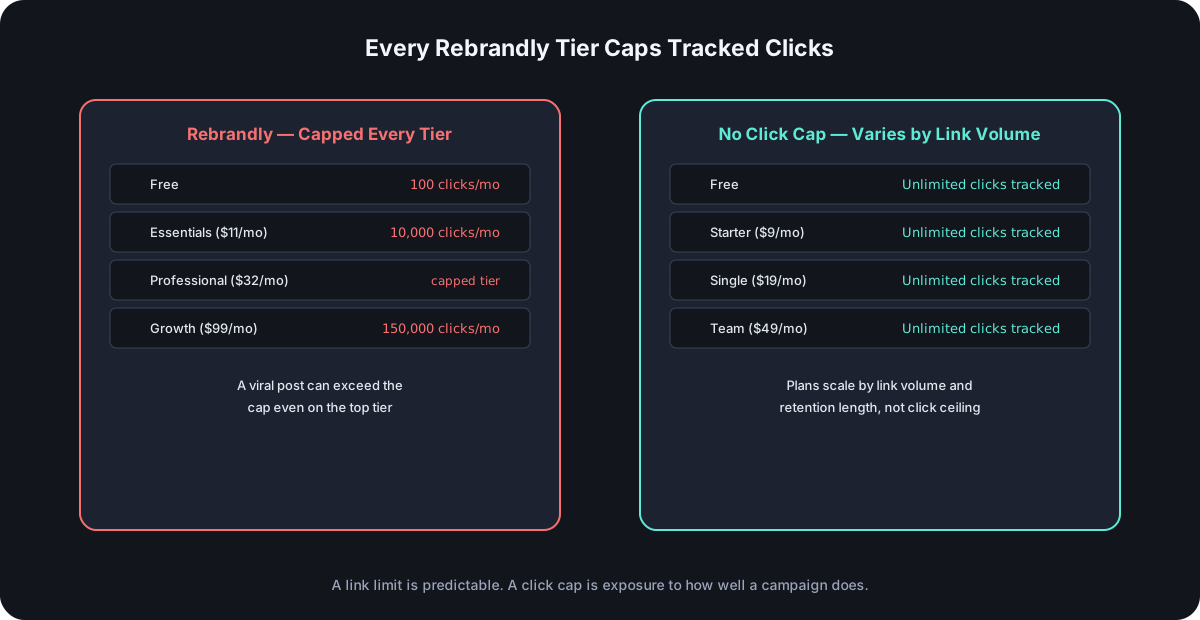
Most searches for a Rebrandly alternative trace back to one specific surprise: every Rebrandly plan, including its paid tiers, caps how many clicks it tracks per month. A single viral post or a successful campaign can blow through that allowance in a day, at which point additional clicks may stop being tracked at all — a strange thing to discover about the tool you're using specifically to measure how well a campaign performed.
Why People Actually Look for a Rebrandly Alternative
Rebrandly is a genuinely strong, direct competitor built around the same core pitch as most branded-link tools — custom domains, team access, campaign links. The click cap is the specific detail that sends people searching: unlike a link-creation limit, which is predictable and easy to plan a plan around, a click cap is exposure to something you don't fully control. A campaign performing better than expected shouldn't be the moment your analytics stop working, but on a click-capped plan, that's exactly the failure mode.
What a Click Cap Actually Means in Practice
Every Rebrandly tier — including paid ones — tracks clicks against a hard monthly ceiling, from a low number on the free plan up to a six-figure cap even on its higher-priced Growth tier. Hitting that ceiling doesn't necessarily stop the redirect from working; it can mean the clicks past the cap simply aren't reflected in your analytics anymore, which is a quiet, easy-to-miss failure — the link keeps working, the data just stops being complete right when a campaign is performing best.
What to Check Before Switching
Does the alternative cap clicks at all, or only link creation? These are genuinely different constraints. A link-creation cap is a volume limit you control by deciding how many links to make; a click cap is exposure to how many people click them, which you don't control the same way.
Is what you actually need bundled, or does every extra feature require a separate tool? Funnels, retargeting pixels, and link-in-bio pages either come with the platform or they don't — check this specifically rather than assuming "custom domains and analytics" covers everything a growing campaign program eventually wants.
How does team pricing actually scale? Per-seat costs and what's included at each headcount vary significantly across this category — worth modeling out at the team size you actually expect to reach, not just the size you're at today.
What happens to historical analytics if you migrate? Worth confirming directly with whichever tool you're leaving — some platforms offer a data export before you close an account, others don't retain anything accessible once a subscription lapses, and losing months of click history is a bigger loss than most people plan for until it's already happened.
How the Numbers Actually Compare
Rebrandly's paid tiers price around $11–99/month depending on volume and team size, with the click cap present at every level — its $99/month Growth tier still caps at 150,000 tracked clicks a month. Cut.bd's comparable tiers run $9–49/month and don't cap clicks by plan at all — analytics retention length varies by tier instead, which means a traffic spike doesn't suddenly stop the data from recording, it just eventually ages out of the retention window rather than getting dropped in real time. The complete side-by-side has the full tier-by-tier breakdown, including where Rebrandly's multi-domain strengths still make it a reasonable fit for specific multi-brand setups.
Beyond Cut.bd: The Rest of the Field
Rebrandly isn't the only option built around branded, custom-domain links, and it's worth knowing where the rest of the category sits even if the click cap is your specific dealbreaker. The broader roundup of Bitly alternatives covers Bitly, TinyURL, and Short.io alongside Rebrandly and Cut.bd — useful context if the click cap turns out not to be the only thing worth comparing before you pick a replacement. Short.io in particular takes the opposite approach to click limits entirely: generous volume on paid tiers, with fewer bundled extras like funnels or bio pages, which is its own trade-off worth weighing against Rebrandly's capped-but-feature-richer positioning.
Frequently Asked Questions
Is Rebrandly a bad product because of the click cap? No — it's a real, capable tool, and the cap is disclosed on its own pricing page, not hidden. It's a poor fit specifically for unpredictable or viral traffic patterns, and a fine fit for predictable, planned campaign volume within a known ceiling.
Will switching shorteners break existing shared links? It can, if the domain or slug changes — check whether an alternative lets you migrate your existing custom domain and link structure, or forces a fresh start that breaks anything already shared or printed.
Is a higher click cap the same as no click cap? No — a higher ceiling delays the problem, it doesn't remove it. A single unusually successful campaign can still exceed even a generous cap, which is a structurally different risk than a tool with no cap at all.
Does avoiding a click cap mean paying more overall? Not necessarily — it depends on which constraint (link volume, team seats, click volume) actually matches your real usage pattern; comparing total cost at your actual expected volume matters more than comparing headline prices alone.
Where Cut.bd Fits
Cut.bd doesn't cap clicks on any plan — plans scale by link-creation volume and analytics retention length instead, from Free (30 links/month) up through Team ($49/month, 20,000 links/month, 10 domains, 5 seats). Conversion funnels and bio pages are included from the Free and Starter plans respectively, rather than requiring a separate tool alongside the shortener. The full Cut.bd vs. Rebrandly comparison covers the complete tier-by-tier numbers if you're actively deciding between the two.
Found this useful? Share it.
Try Cut.bd's link shortener — free, no account required.
Shorten a link