Short.io Alternatives Compared
Short.io's pitch is straightforward and genuinely competitive: generous link and click volume per dollar, custom domains from a low starting price, no aggressive gating of the basics. People start looking for a Short.io alternative for the opposite reason most shortener searches happen — not because a limit was hit, but because the need grew past "links and domains" into something Short.io doesn't build in at all.
Why People Actually Look for a Short.io Alternative
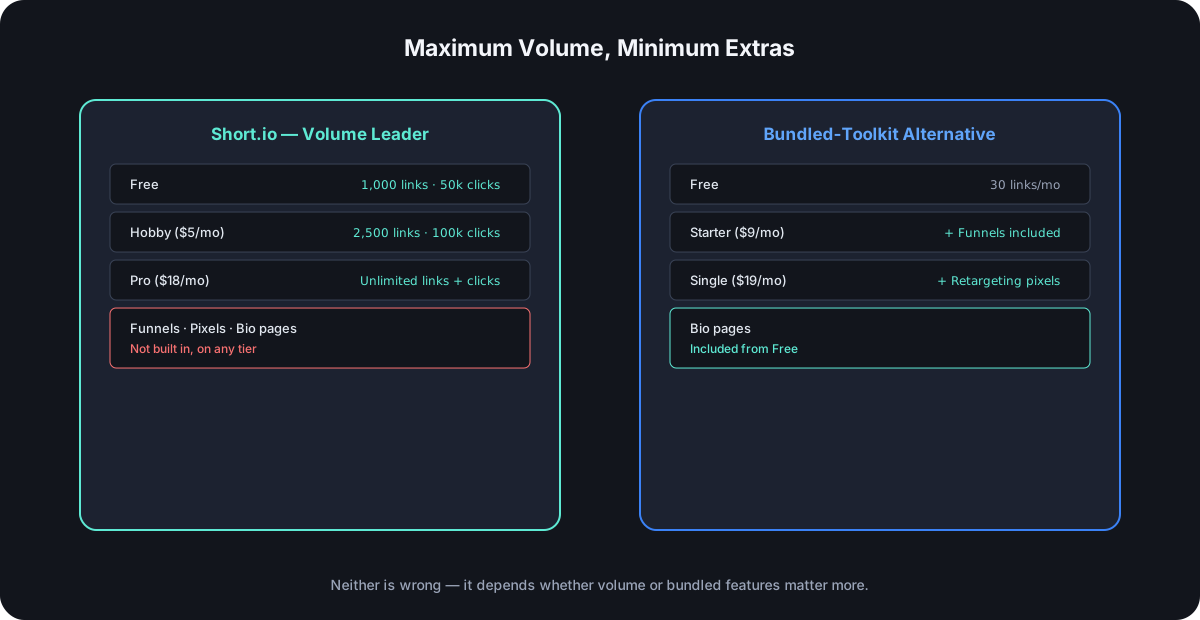
Short.io isn't a volume problem the way Bitly's tight tier limits or Rebrandly's click caps are — its allowances are genuinely generous even on its cheapest paid tier. The gap shows up in features beyond core shortening: conversion funnels, retargeting pixels, and link-in-bio pages aren't part of the product, which means a team that eventually wants any of those ends up either stitching together separate tools or looking at a platform that bundles them in from the start.
Where Short.io Genuinely Wins
Worth saying plainly before anything else: if the actual need is high-volume branded links with straightforward click analytics and nothing more, Short.io's per-dollar volume is hard to beat — its entry paid tier alone offers thousands of links and a hundred thousand tracked clicks a month at a low price point, scaling to unlimited links and clicks by its mid tier. Switching away from that for features you don't actually need would be trading a genuine strength for nothing.
What's Missing Once You Need More Than Links
Conversion funnels — multi-step tracking across a sequence of pages, not just a single link's click count — aren't a Short.io feature at any tier. Retargeting pixels, which let you build an ad-retargeting audience from anyone who clicked a link, are similarly absent. Link-in-bio pages aren't built in either, meaning a team that wants one is managing a second product and a second login alongside the shortener rather than one bundled system.
How the Numbers Actually Compare
Short.io's free plan covers 1,000 links and 50,000 tracked clicks across 5 domains — genuinely generous — with its $5/month Hobby tier scaling further to 2,500 links and 100,000 clicks across 7 domains, and its $18/month Pro tier removing the link and click ceiling entirely. Cut.bd's comparable tiers ($9–49/month) trade some of that raw volume headroom for funnels included from Starter, retargeting pixels from Single, and bio pages from Free — a different bet on what's worth paying for, not a strictly better or worse one. The complete tier-by-tier comparison has the full breakdown if volume and bundled features both matter to your decision.
What to Check Before Switching
Would you actually use the bundled features, or just the shortening? If funnels, pixels, and bio pages would sit unused, Short.io's volume-first pricing is likely the better fit regardless of what a feature comparison table shows.
Does your current usage actually approach Short.io's generous ceilings? If not, the volume advantage isn't costing you anything to begin with, and the decision comes down entirely to whether the missing features matter.
Is your team already paying for a separate bio-link or retargeting tool? If so, the real comparison isn't Short.io's price against a bundled alternative's price — it's Short.io's price plus whatever those separate tools cost, against one bundled subscription.
Beyond Cut.bd: The Rest of the Field
Short.io sits at one end of a real trade-off in this category — maximum volume, minimum extras — and it's worth knowing where the other end sits too. Rebrandly takes close to the opposite approach: more bundled features, but a hard monthly click cap on every tier, including its paid ones. Bitly sits in between on features but prices link volume more aggressively than either, which is worth knowing if brand recognition is part of what's drawing you to consider it. None of these is a universally better choice — the right one depends entirely on whether volume, features, or brand familiarity is the actual deciding factor for your specific use case.
Frequently Asked Questions
Is Short.io a worse product than tools with more built-in features? No — it's optimized for a different priority. A tool that does fewer things well isn't automatically worse than one that does more things adequately; it depends entirely on which things you actually need.
Can Short.io's link and click limits ever become a real constraint? Its ceilings are high enough that most individual users and small teams won't hit them, though a large team or a high-traffic use case should still check the specific numbers at the tier they'd actually pay for rather than assuming "generous" means "unlimited" at every level.
Is it worth paying more for bundled features you're not using yet but might need later? Only if "later" is reasonably near-term and predictable — paying ongoing extra cost for a hypothetical future need indefinitely is a real cost, not a free hedge.
Does switching mean losing existing short links people already have saved? Depends on whether you can migrate your existing custom domain and slugs — worth confirming before committing to a switch, especially for links already printed or widely shared. Re-pointing the same domain at a new provider, rather than starting over on a new one, is usually what preserves everything already distributed.
Where Cut.bd Fits
Cut.bd's tiers run $9–49/month with conversion funnels included from Starter, retargeting pixels from Single, and bio pages from the Free plan — a bundled-toolkit bet rather than a pure-volume one. If raw link and click ceiling is the only thing that matters, Short.io's numbers are genuinely hard to beat at its price points; the full side-by-side lays out exactly where each plan wins so the volume-versus-features trade-off is a specific, numeric decision rather than a guess.
Found this useful? Share it.
Try Cut.bd's link shortener — free, no account required.
Shorten a link