Branded Short Links: Why They Boost CTR
Branded short links consistently outperform generic shortener domains on click-through rate — that part gets asserted constantly. What's less often explained is why, and the mechanisms behind it matter more than the claim itself, because they tell you exactly when a branded domain is worth the setup effort and when it isn't.
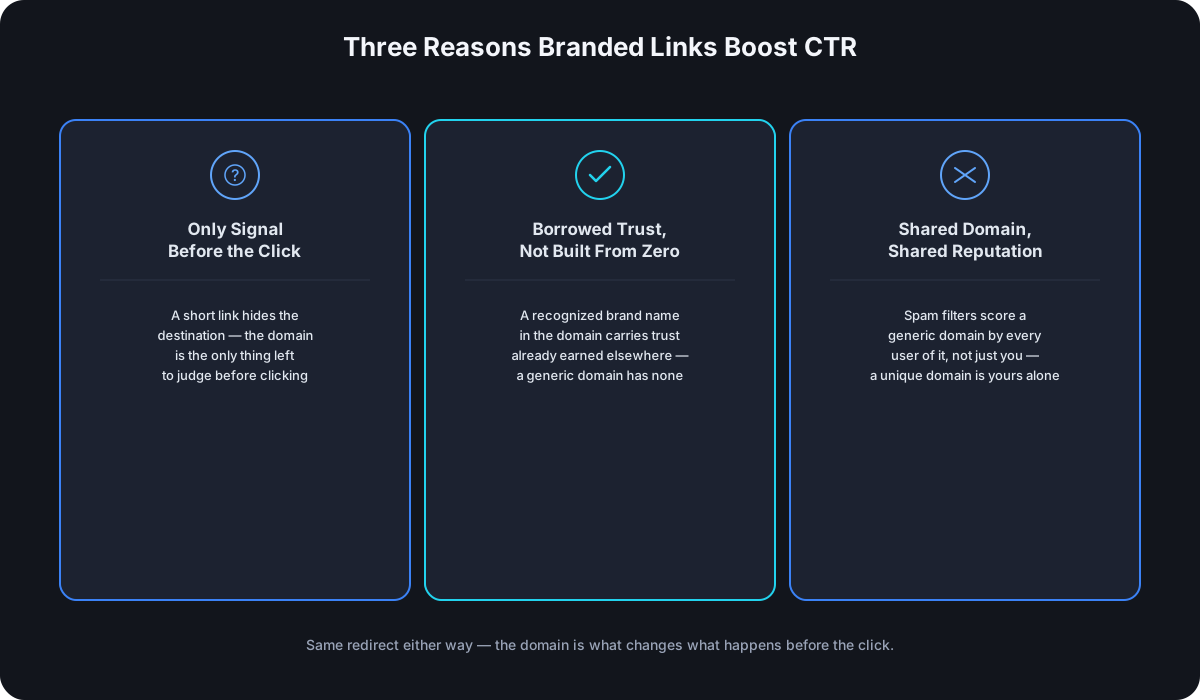
The Domain Is the Only Signal Before the Click
A full URL carries some context in its path — yourstore.com/summer-sale tells you something even before you click. A short link strips almost all of that away by design; go.yourbrand.com/launch and bit.ly/3xK9fQ2 both hide the destination equally. What's left as the only pre-click signal is the domain itself. Whatever trust or distrust that domain carries is the entire basis for the decision to click, because there's nothing else to go on.
Brand Recognition Does Double Duty
A domain someone already recognizes doesn't need to earn trust from zero — it borrows trust the brand already built somewhere else. Seeing go.yourbrand.com on an unfamiliar link works because the "yourbrand" part is already known, even if this specific link isn't. A generic shortener domain has no such shortcut available: bit.ly or tinyurl.com carries whatever reputation that shortener has earned in general, which says nothing about who's actually behind this particular link.
Spam Filters Judge the Domain, Not Just the Sender
This is the mechanism that's easiest to overlook. Generic shortener domains are shared infrastructure — used simultaneously by legitimate marketers and by spammers at genuinely high volume, which means email and chat spam filters that score domain reputation are scoring the aggregate behavior of everyone using that domain, not just your own sending history. A domain unique to your business carries only your reputation. It's slower to build initially, but it's yours alone — no other sender's abuse of the same shared domain can drag it down.
Repetition Reinforces the Brand, Not a Third Party
Every branded link a person sees across a poster, an email footer, a social bio reinforces recall of your brand specifically. Every generic-domain link shared the same way reinforces recall of the shortener's brand instead — the repeated exposure is real either way, it's just a question of who it accumulates for. Over enough touchpoints, that difference compounds into brand familiarity that either belongs to you or doesn't.
When the CTR Difference Matters Most
The mechanisms above matter more in some situations than others:
- Cold audiences — ads, cold outreach, a link on printed material handed to a stranger — have no existing relationship to lean on, so the domain is doing all the trust-building work alone. This is where a branded domain's advantage is largest.
- Warm audiences — an email to existing subscribers, an internal team link — already trust the sender regardless of what domain the link sits on. The advantage is still real, just smaller, because the sender relationship is already carrying most of the trust.
Combine It With a Memorable Slug for the Full Effect
The domain and the slug are two separate levers, and the CTR mechanisms above are really about the domain half specifically — a branded domain with a random auto-generated code (go.yourbrand.com/x7fQ2) still gets the trust and spam-filter benefits described above, since those come entirely from the domain being recognizable. But pairing the branded domain with a readable, on-topic slug (go.yourbrand.com/summer-sale) stacks a second, independent benefit on top: the link itself previews what it leads to, which is a form of trust-building the domain alone can't provide. Neither lever depends on the other, but using both compounds the effect rather than just adding it once.
The Setup Itself Isn't the Hard Part
Understanding why a branded domain helps is one question; actually configuring one is a separate, much smaller task — a single DNS record and a few minutes of waiting, covered in full in our custom domain setup guide. The perceived effort is usually the bigger barrier than the actual effort.
Frequently Asked Questions
Does a branded domain guarantee a higher CTR? No — it removes one specific barrier (domain distrust), not every barrier to clicking. The content and context around the link still matter; a branded domain improves the odds, it doesn't override everything else.
Is the CTR benefit the same across every platform? Not exactly — platforms and contexts where the domain is highly visible before clicking (a printed flyer, a bio link) benefit more directly than contexts where the link is embedded in already-trusted surroundings, like an app's own in-product notification.
Do generic shorteners get flagged as spam more often in practice? They're exposed to that risk more than a unique domain is, specifically because shared infrastructure at scale inevitably includes some volume of abuse that a unique domain never has to share reputation with.
Is it worth setting up a branded domain for a single short-term campaign? Usually not on its own — the setup cost is small, but the CTR benefit compounds with repeated exposure over time. A single campaign gets some benefit; a domain used consistently across many campaigns gets the full effect.
Can a branded domain hurt trust instead of helping it? Only if the domain itself looks unprofessional or unrelated to the brand — a mismatched or confusing subdomain choice can undercut the same trust mechanism it's meant to support, which is why picking a clear, on-brand subdomain matters as much as having one at all.
Where Cut.bd Fits
Cut.bd includes a custom domain on the Free plan, so the branded-domain trust advantage described here isn't gated behind a higher tier. See how to set one up for the actual DNS steps, the custom domain feature page for the full details, or the complete link-in-bio and branding guide for how this fits into branding more broadly.
Found this useful? Share it.
Try Cut.bd's link shortener — free, no account required.
Shorten a link