UTM Governance: Keeping Tags Consistent Across Teams
A naming convention is a document. Governance is what keeps that document from being purely aspirational once more than one person is tagging UTM-tracked links. The mistakes that survive a perfect convention almost all trace back to the same root cause: nobody was positioned to catch them before they shipped. Governance is the operational layer — ownership, review, onboarding, and periodic checking — that closes that gap without turning every single tag into a bottleneck.
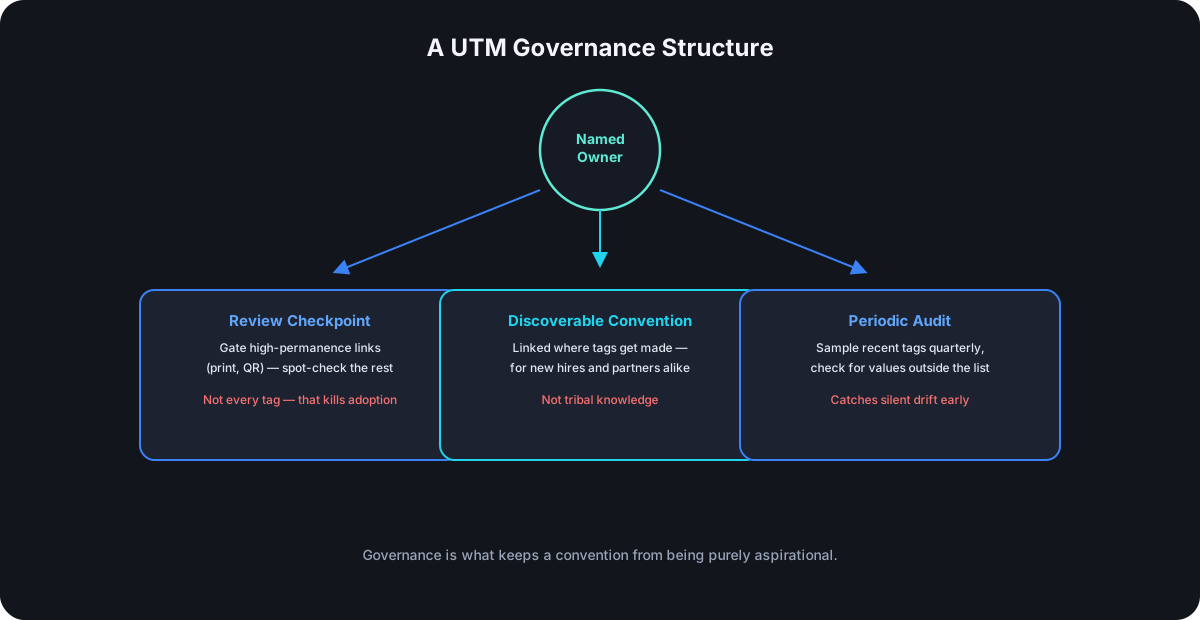
Assign an Owner, Not a Committee
One person, or one clearly defined role, should own the convention document itself — not necessarily approving every tag that goes out, but being the source of truth when a new channel needs a decision and the point of escalation when something genuinely doesn't fit the existing rules. Ownership without a name attached diffuses into nobody's job, which is functionally the same as having no governance at all; a committee can maintain a document, but only a named person reliably notices when it's drifting.
A Lightweight Checkpoint, Not a Bottleneck
Requiring approval before every single tagged link goes live kills adoption fast — people route around a slow process, which produces worse consistency than no process at all. The workable version is narrower: reserve an actual review step for the situations where a mistake is expensive to fix, not everything. A typo in a digital link is trivially fixable; a typo baked into a printed QR code is not — that asymmetry is exactly what should decide where a review checkpoint actually sits. Spot-check the low-stakes majority occasionally; gate the high-permanence minority every time.
Make the Convention Discoverable, Not Tribal
A convention that lives in one person's memory, or in a Slack thread from eight months ago, doesn't survive team growth or turnover. The naming rules themselves need to live somewhere linked directly from wherever tags actually get created — a pinned doc referenced in the tool itself, not a resource someone has to already know exists to find. Onboarding a new team member to the tagging convention should be a five-minute read, not a question they have to think to ask.
Agencies and Vendors Are a Real Governance Gap
An external partner generating their own tagged links won't intuit your naming rules — they'll apply whatever convention they use for every other client, which is a real, common source of exactly the inconsistency governance exists to prevent. The fix isn't assuming competence or hoping it works out; it's handing partners the actual convention document as part of onboarding them, and spot-checking their first batch of tagged links specifically before assuming they've adopted it correctly.
Periodic Audits: What to Actually Check
A governance process without any recurring check is just a convention with extra steps. A lightweight quarterly audit — sampling a set of recent tags rather than reviewing every single one — catches the thing that matters most: new medium or source values that crept in without a deliberate decision to add them. A closed list only stays closed if someone occasionally checks whether new values have quietly appeared outside it, since that's the specific failure mode a one-time setup can't prevent on its own.
Version the Convention Itself
Conventions change — a new channel gets added, a campaign-naming pattern gets refined after a reporting gap makes the old one look inadequate. Governance includes deciding how those changes happen: a dated, deliberate update to the shared document, not a silent one-off decision that only the person who made it knows about. Treating the convention as a versioned document — what changed, when, and why — is what lets an audit distinguish "this tag predates the last update" from "this tag is simply wrong."
Have a Real Process for Exceptions
Every convention eventually meets a genuinely new situation it didn't anticipate — a channel type nobody had used before, a campaign structure that doesn't fit the existing pattern cleanly. Governance needs an actual answer for this moment, not just a rule for everything the convention already covers. The answer isn't "whoever's tagging the link decides on the spot" — that's how one-off values quietly become permanent exceptions nobody remembers approving. It's a quick path to the owner: propose the new value, get a decision, and if it's approved, add it to the convention document itself so the next person facing the same situation doesn't have to improvise their own answer.
Frequently Asked Questions
Does governance need dedicated tooling, or can it run on a shared doc? A shared, well-linked document is enough to start — the ownership, review, and audit habits matter more than the tooling they run on, though a centralized system where every tag is stored with its link makes the audit step meaningfully easier than reconciling a spreadsheet against scattered platforms.
How much time should a quarterly audit actually take? Deliberately small — sampling a few dozen recent tags against the convention's closed lists takes an hour, not a day. The goal is catching drift early and often, not achieving perfect coverage every single time.
What's the single highest-leverage governance habit for a small team? Making the convention discoverable at the exact point someone creates a tag, rather than a separate document they have to remember exists — most drift happens from people not knowing the rule, not from deliberately ignoring it.
Should governance rules apply retroactively to old tags? No — apply them going forward, and clean up historical data separately and only if a specific reporting need justifies the effort; retroactively re-tagging old links is rarely worth blocking new, consistent tagging on.
Where Cut.bd Fits
Every UTM tag created through Cut.bd's link editor lives with the link itself in one dashboard — which is exactly what makes a periodic audit actually feasible rather than a reconciliation project across a spreadsheet and several disconnected tools. It doesn't replace the ownership and review habits this guide covers, but it removes the "where do I even look" problem that makes most teams skip the audit step entirely.
Found this useful? Share it.
Try Cut.bd's link shortener — free, no account required.
Shorten a link