UTM Parameters 101: The Complete Guide
Without UTM parameters, your analytics tool sees every visitor the same way regardless of what actually brought them: a click from an Instagram story, a newsletter link, and a paid ad all collapse into generic "referral" or "direct" traffic. UTM parameters are the fix — small tags appended to a URL that tell your analytics tool exactly where a click came from, campaign by campaign, post by post.
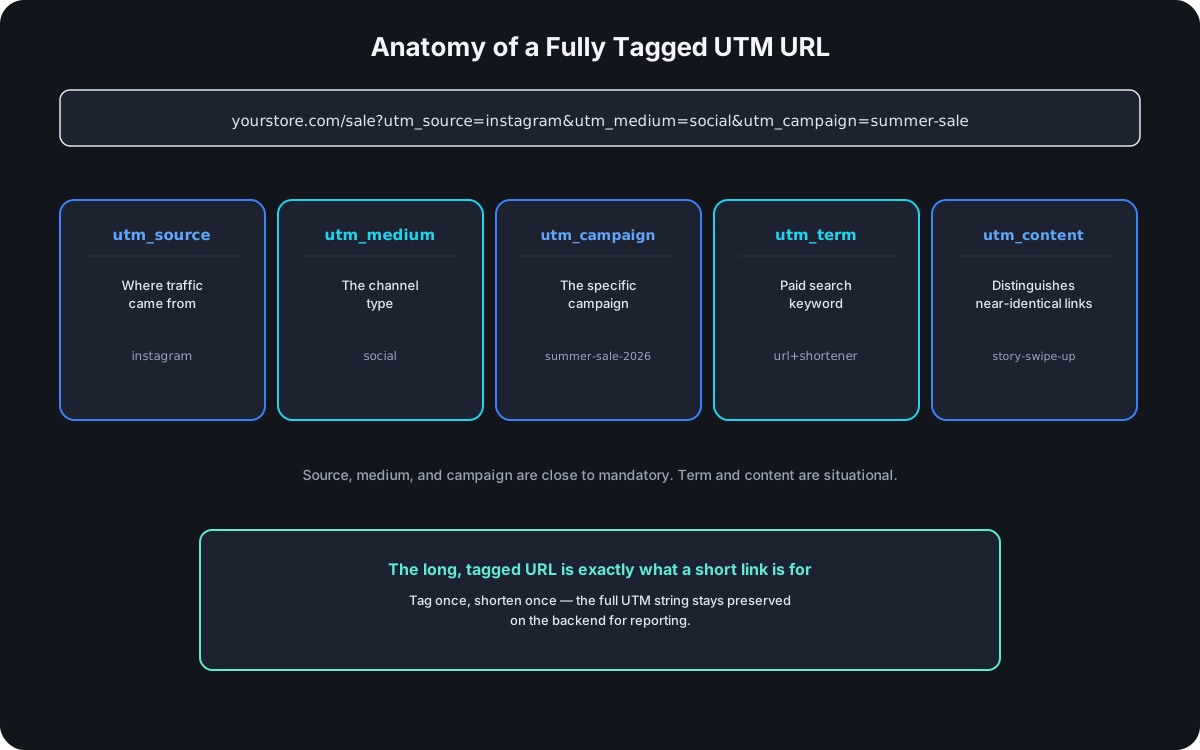
What UTM Parameters Actually Are
UTM stands for Urchin Tracking Module — a naming holdover from the analytics tool Google acquired and built Google Analytics on top of, though nobody uses the acronym's original meaning today. Functionally, they're just query string parameters: extra key=value pairs appended to a URL after a ?, which don't change what page loads but do get read by analytics tools to attribute that visit to a specific source.
The Five UTM Parameters
| Parameter | What It Identifies | Example |
|---|---|---|
utm_source | Where the traffic came from | instagram, newsletter, google |
utm_medium | The channel type | social, email, cpc |
utm_campaign | The specific campaign | summer-sale-2026 |
utm_term | Paid search keyword, if relevant | url+shortener |
utm_content | Distinguishes near-identical links | story-swipe-up, header-cta |
utm_source and utm_medium are close to mandatory in practice — most analytics tools need at least those two to attribute a session meaningfully. utm_campaign is almost as universal once you're running more than one campaign at a time. utm_term and utm_content are situational: utm_term mostly matters for paid search, and utm_content earns its keep specifically when two links in the same campaign would otherwise be indistinguishable — two different buttons in the same email, for instance.
Anatomy of a Fully Tagged Link
https://yourstore.com/sale
  ?utm_source=instagram
  &utm_medium=social
  &utm_campaign=summer-sale-2026
  &utm_content=story-swipe-up
Everything before the ? is the actual destination page — nothing about it changes based on the tags. Everything after is metadata for your analytics tool, invisible to the page itself unless something on that page is specifically built to read query parameters.
How UTM Data Flows Into Your Analytics
When someone lands on a tagged URL, your analytics tool (Google Analytics 4 and most competitors work this way) reads the utm_* parameters directly from the page's URL on that first page load and attributes the entire session to those values — source, medium, and campaign all get recorded before the visitor does anything else on the page.
This is also where tagged links quietly break: any redirect chain, email client, or platform that strips query parameters on the way to the destination takes the UTM data with it. A visitor still reaches the right page, but the attribution is gone — which is a real, silent failure mode worth testing for, not just assuming won't happen.
UTM Naming Conventions
Attribution data is only as useful as it is consistent. utm_source=Instagram and utm_source=instagram register as two different values to most analytics tools — same platform, split into two rows in every report that uses it. The fix isn't complicated, just easy to skip: pick a convention (lowercase, hyphenated is the most common) and write it down somewhere the whole team can see it, before the first campaign goes out rather than after six months of inconsistent tags need cleaning up. A full naming convention template covers the specific rules per parameter, plus a worked example, if you want something more concrete than "pick a convention."
Common UTM Mistakes
A short list covers most of what actually goes wrong in practice: inconsistent casing (covered above), UTM parameters missing entirely on links that need them, five parameters tagged when the situation only calls for three, and — the one that connects directly to link shortening — a fully tagged URL that's so long and parameter-heavy it gets flagged by spam filters or just looks untrustworthy enough that people hesitate to click it.
Tagging URLs at Scale
Hand-typing UTM parameters into every link works for a handful of campaigns and stops working somewhere past that. A dedicated UTM builder — whether a standalone tool or one built into your link shortener — fills in the parameters through a form and generates the tagged URL consistently, which also happens to be the natural place to enforce the naming convention from a few sections up, since the tool can standardize casing and formatting for you instead of relying on everyone remembering it manually.
Where This Fits: UTM Tracking and Short Links Together
In practice, these two topics travel together constantly. A fully tagged UTM link is long and ugly — exactly the kind of URL that benefits from shortening before it goes anywhere public-facing. The pairing also solves the naming-convention problem structurally: tag once through a shortener's UTM builder, get back a clean custom short URL on your own custom domain, and the full UTM string stays preserved on the backend for reporting — nobody has to see or type the long version at all.
Frequently Asked Questions
Do I need all five UTM parameters on every link? No — utm_source, utm_medium, and utm_campaign cover most needs. Add utm_term and utm_content only when the situation actually calls for that level of granularity, since more tags mean more chances for inconsistency.
Will UTM parameters change what page a visitor lands on? No — they're purely metadata for your analytics tool. The destination page is whatever comes before the ?, and the tags don't affect routing or content unless something on that specific page is deliberately built to read them.
Do UTM parameters work the same way across every analytics platform? The parameter names are a de facto standard that most platforms recognize, but exactly how each one interprets and reports on them varies — worth confirming in your specific analytics tool's documentation rather than assuming universal behavior.
What's the actual cost of inconsistent UTM tagging? Split, incomplete reporting — the same campaign shows up as multiple different rows because of casing or naming differences, making it look smaller or less effective than it actually was, or making a "which channel actually worked" question impossible to answer cleanly.
Where Cut.bd Fits
Cut.bd's link creator has a built-in UTM builder — fill in the parameters once, get back a short, branded link with the full UTM string preserved for analytics on the backend. Every link's tags, notes, and click history stay searchable in one place instead of scattered across a spreadsheet trying to track what was tagged and when.
Found this useful? Share it.
Try Cut.bd's link shortener — free, no account required.
Shorten a link